Or, why I choose to call this place “Mormon Disneyland”
(I’m not alone in feeling like some of the Mormon educational spots are a bit Disney-esque, sounds like they’ve been like that for a while)
Back in June, when the Pandemic sucked a little less, I went out of town with my partner, who was making a trek for a board game tournament. I kind of forced my way into the trip, not going to lie, but not because of the tournament but because of its location.
Salt Lake City. Mormon Town, USA.
I went to school for Religious Studies (and Anthropology) and since I focused a lot on American religious traditions, the Mormons of course came up. Since then, I’ve listened to podcasts, read books, and did some armchair not-so-serious research on Mormons and the LDS Church. I had always hoped to get out to Salt Lake City- I’d only flown into it once on my way to go skiing in Big Sky- and this was my chance.
“you know I’ll be busy the whole weekend with my tournament, right?” My partner asked. “We might not get to hang out much or anything”
“Oh, that’s fine, there’s tons of stuff for me to see in Salt Lake- museums and churches and statues and-“
“Sounds fun” he said flatly.
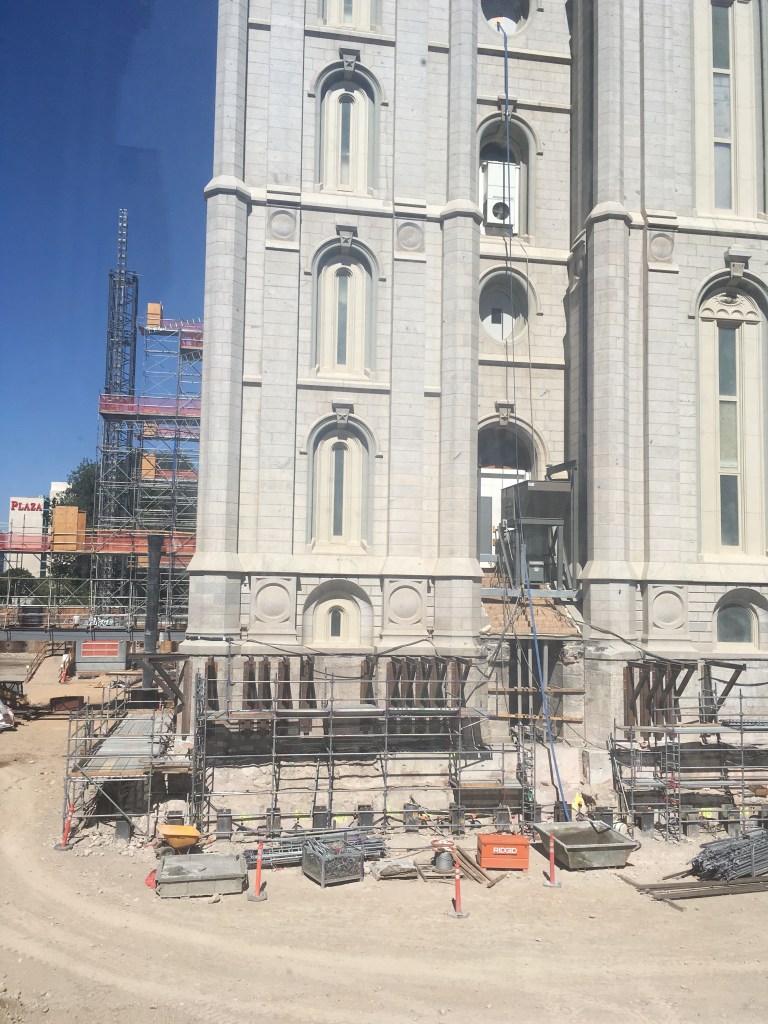
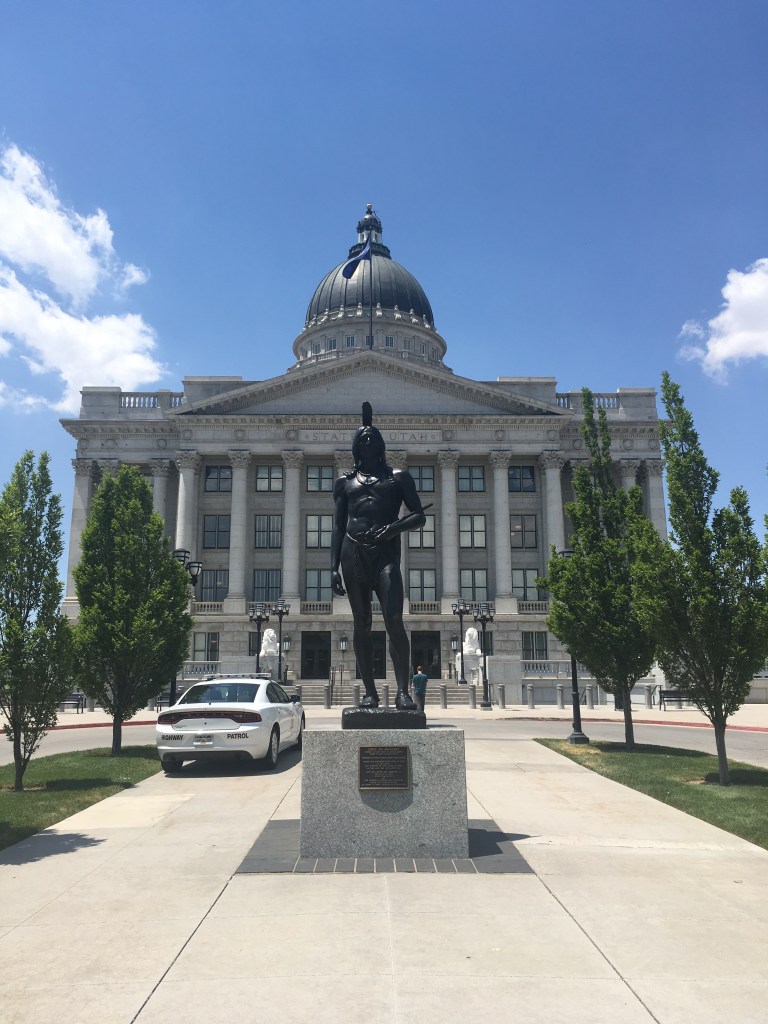
My first day in town consisted of me walking about 10 miles in 80-90 degree heat up to the Capitol building, around Temple Square, out to the train station and through some of the stores in town. Most of the Museums were closed because of COVID (a huge letdown), but I did learn that the Temple, which was being earthquake retrofitted, would be open to the public for six months after the renovations were complete in a few years. The Temple is never open to the public- only the Mormon-iest Mormons can go in there typically, but I’m guessing since there have been so many Gentiles in there during the restoration work they figure 6 more months probably won’t hurt- might even get some converts. You bet that I will be back for that.
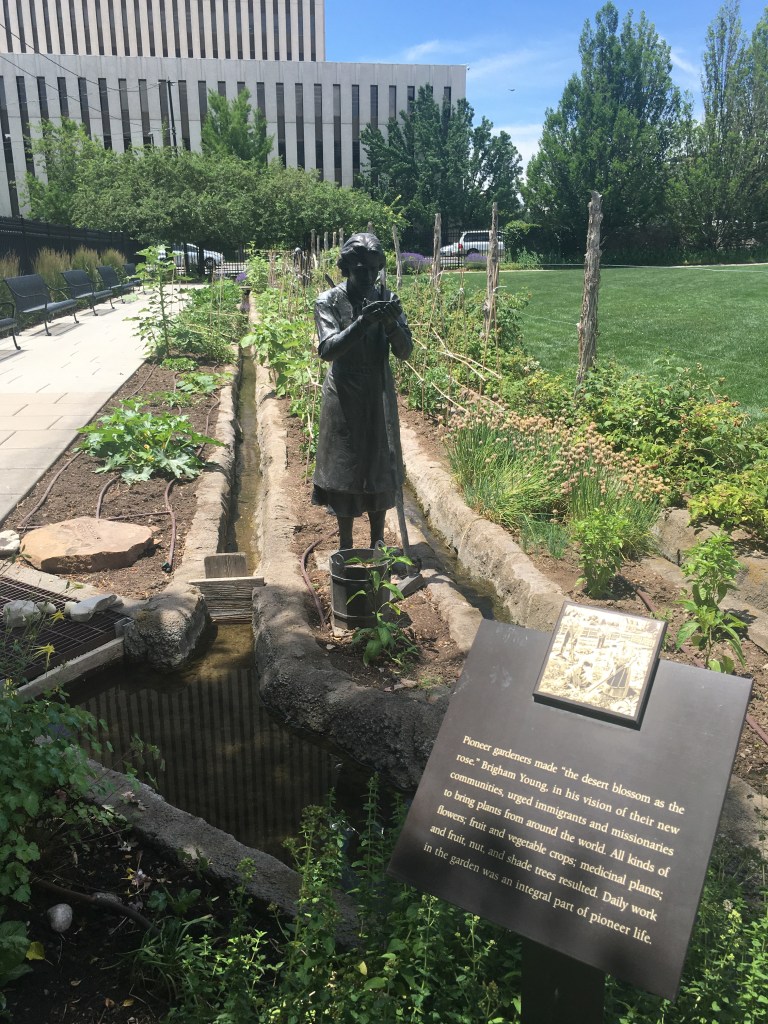
One thing I did notice, especially around Temple Square, was that every single planter was full of plants, almost overflowing really, but well maintained. I know in the Mormon stories about the establishment of Salt Lake that there was a huge emphasis on agriculture and just planting anything to see what would do well- that focus on plants and abundance obviously continues today (and is probably heartily funded by the Church of course).
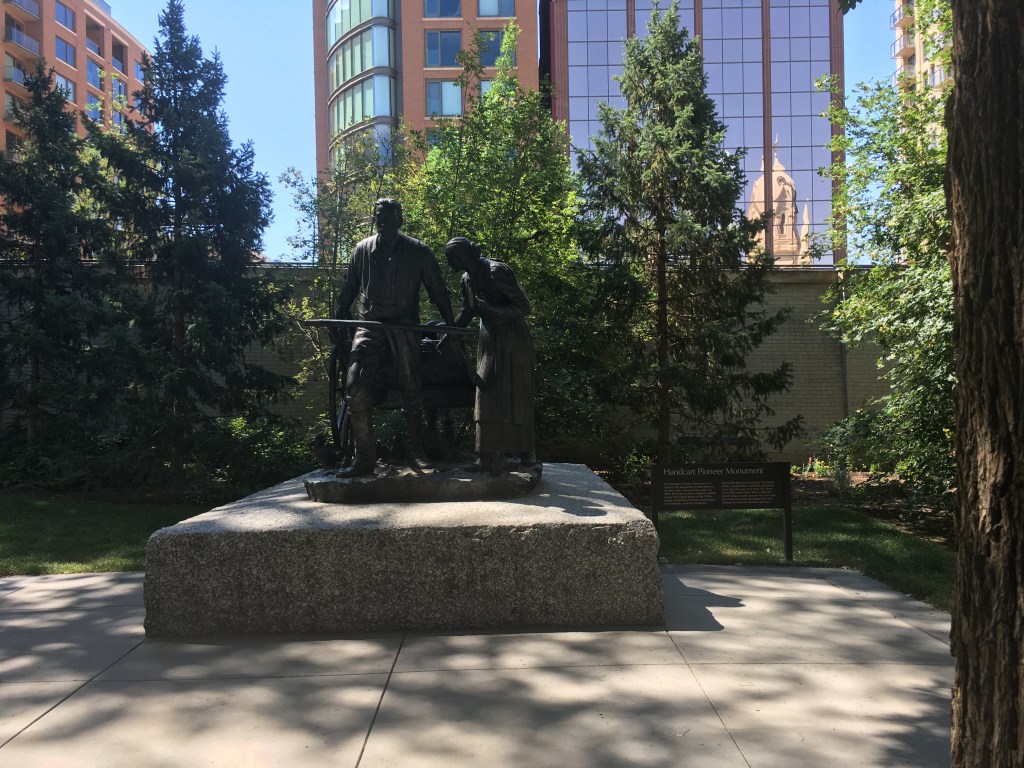
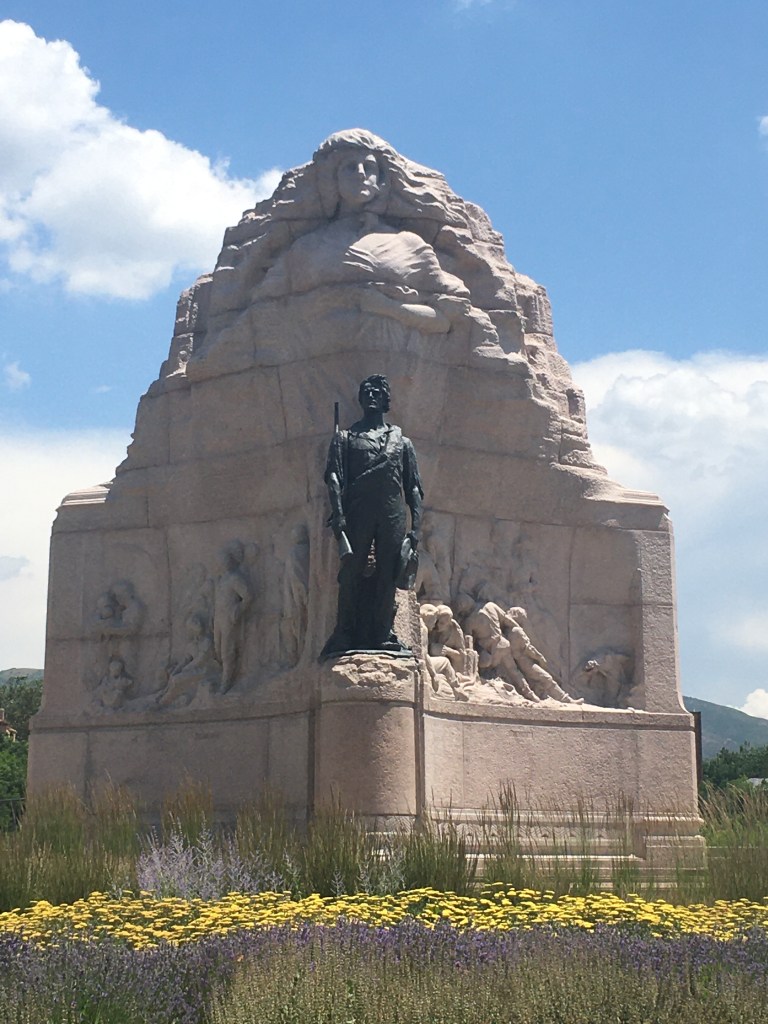
I did get some fun photos of some of the monuments, parks, and other things around Salt Lake- I’ll have to come back to these later and riff on them:





The second day in Salt Lake, I made the run over to the Red Butte Botanical Gardens at the University of Utah (very nice, very nice) and then over to This is the Place Heritage Park.
I don’t know what I expected, but I do know that what I saw wasn’t quite it. I haven’t been able to figure out who exactly owns the park or operates it, but based on the number of missionaries who worked there, and it’s location super close to Salt Lake, many fingers point towards it probably being a LDS operation. It wouldn’t be surprising considering how many buildings related to Brigham Young are on site and it’s heavy focus on, well Mormons. Mormons do love their history.
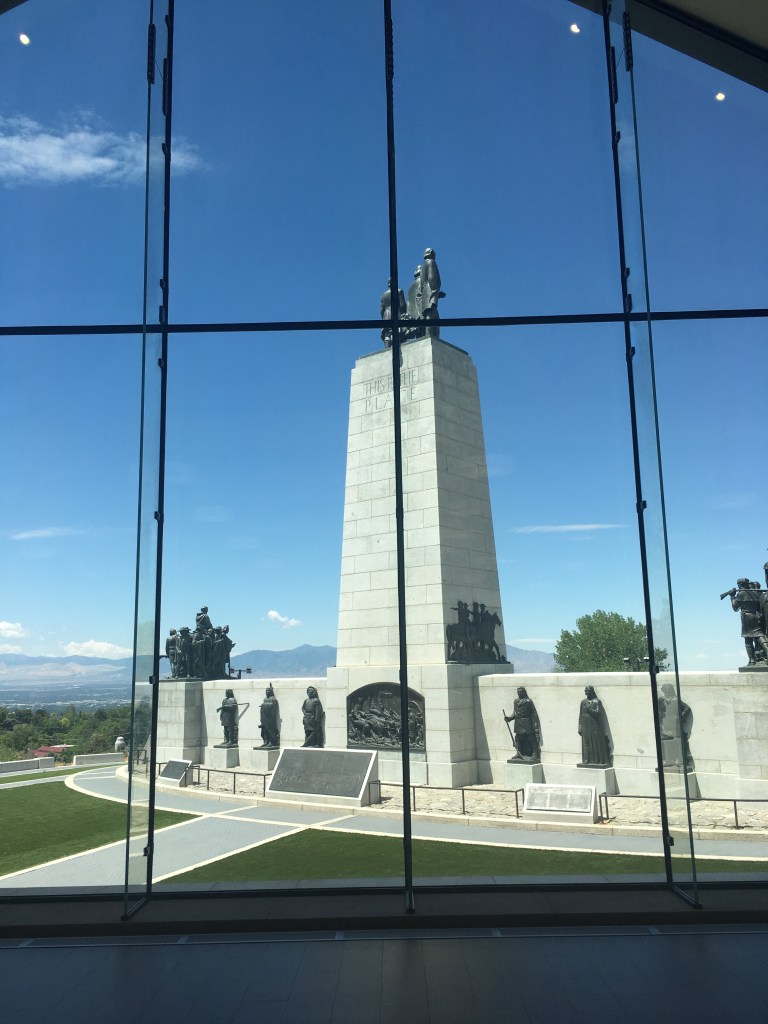
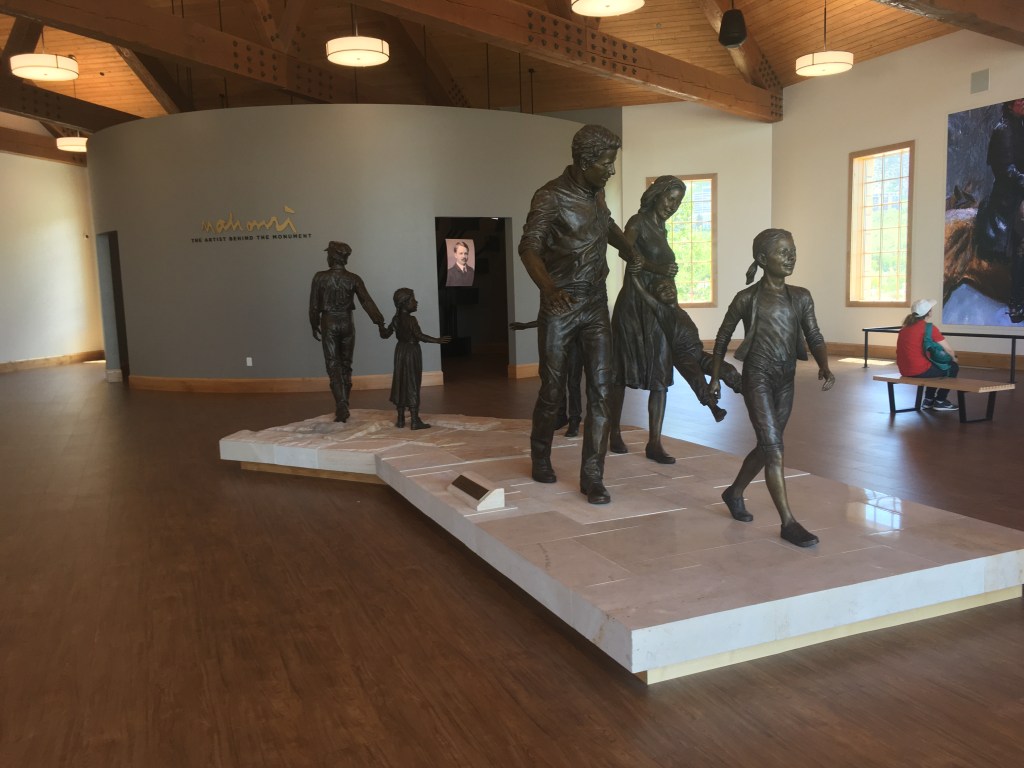
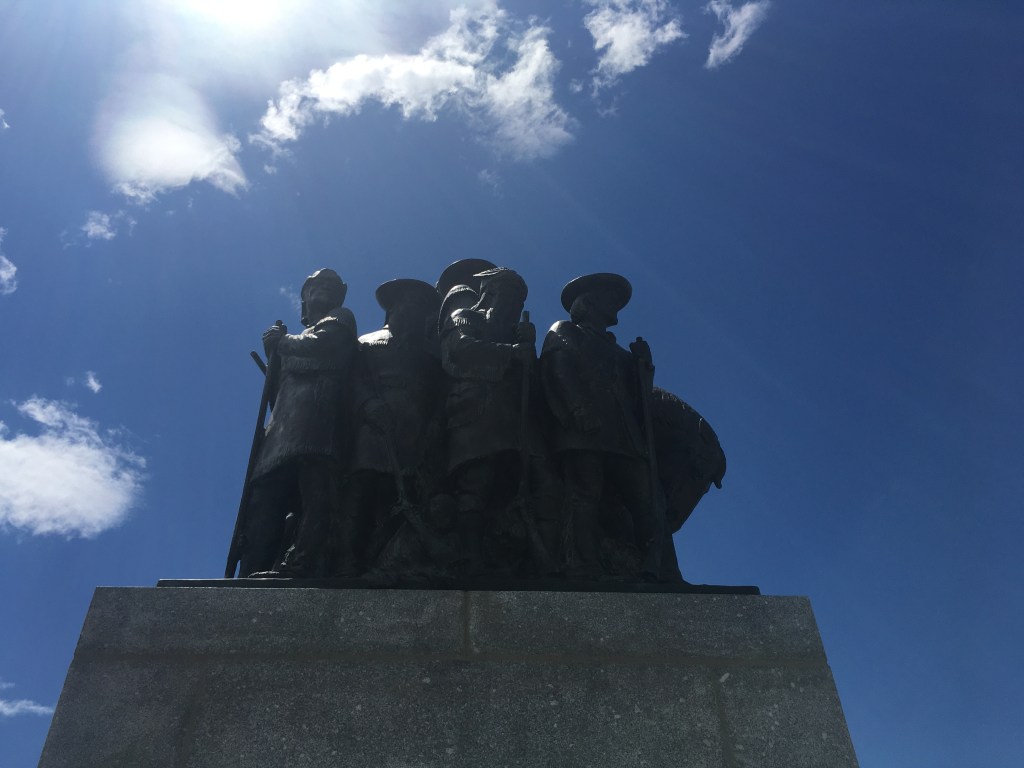
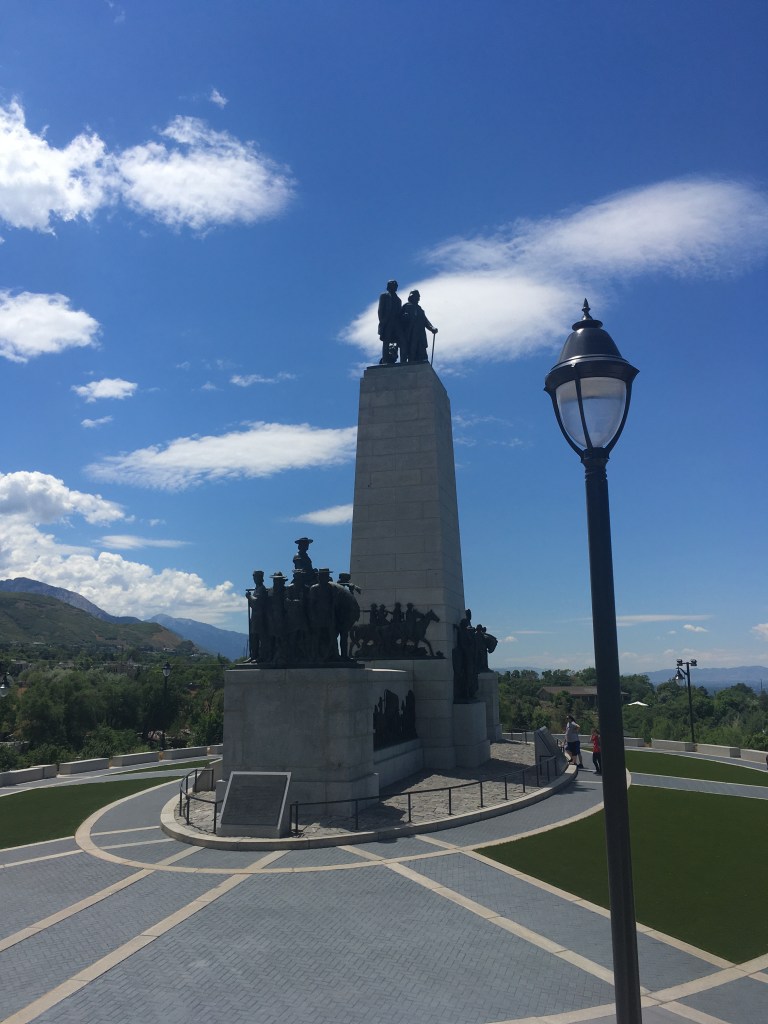
First of all, I parked and went into the Pioneer Center, which was huge and spacious- a new addition to the Park it seemed, with a few exhibit space talking about the building of the “This is the Place” Monument- a big honkin’ tower with the likeness of Brigham Young, Herber C. Kimball, and Wilford Woodruff on the top and a whole crew of others in both statue and relief around the base. The Monument can be viewed (along with its outstanding backdrop looking over the Salt Lake Valley) through a huge floor to ceiling window in the Pioneer Center. Near that window is a collection of statues that display and evoke the feeling of moving from the past into the present and future, with two young pioneer children reaching their hands out to a modern day child and her family moving toward the monument. This was my first interaction with the really interesting and numerous statuary at the park.
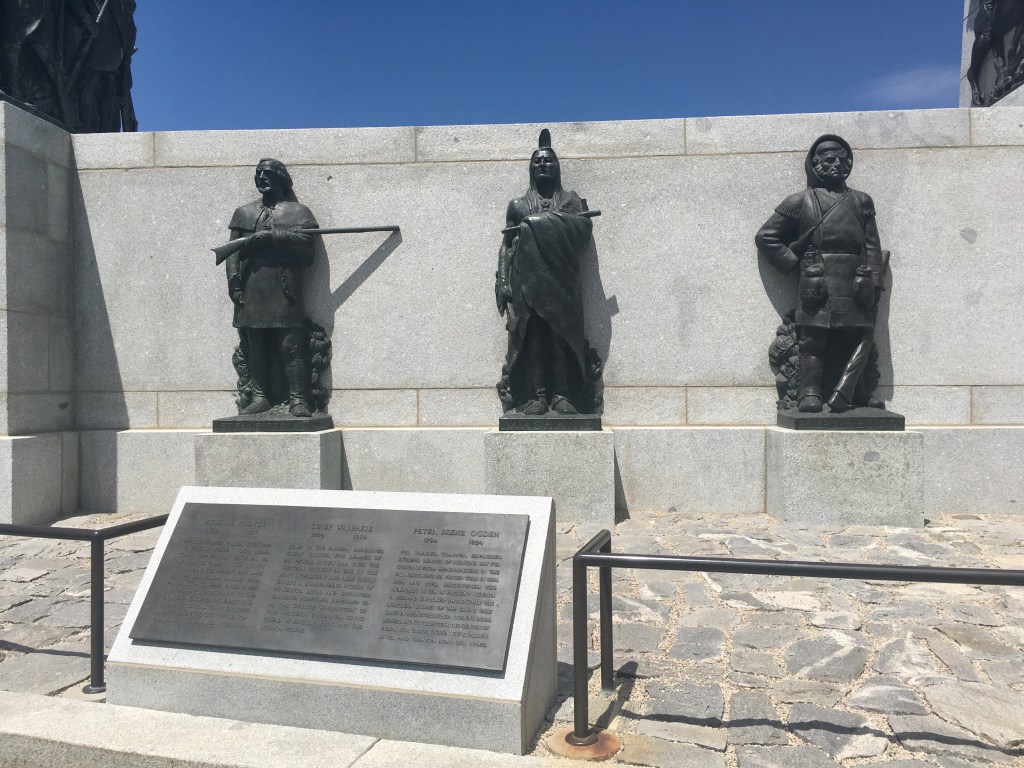
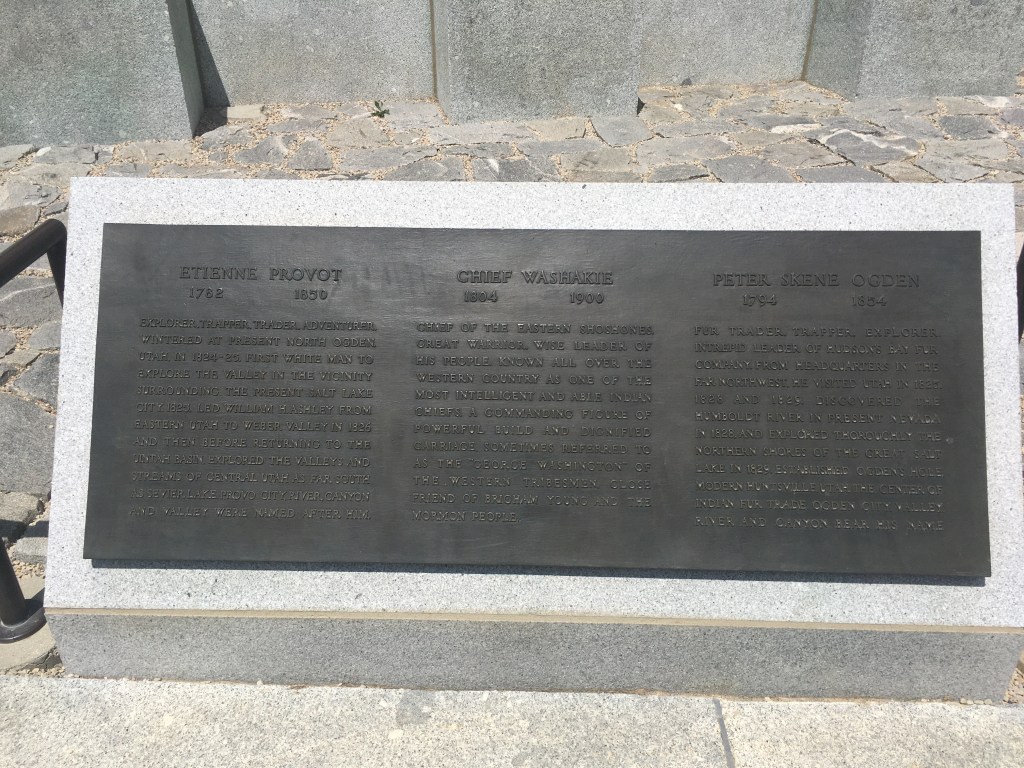
There’s also this humungous multi-panel video screen off to the far right of the image above that tells the story of the Mormon pioneers through various paintings and whatnot, it’s all very inspiring, although very quiet on the Native history of the area. I think the only references to Native history in the park are one of the statues at the base of the This is the Place Monument and the Native shelters, which I’ll take about later.
I headed out to the big monument and, being a nerd, read all the plaques which told a version of the Mormon migration tale and explained who the various people were on the monument who played roles in the migration story. Hunters, trappers, and Indians on the back side of the monument, pioneers on the front. Movement from the past (on the back side of the monument) to the more recent present (closer to the front of the monument) and the location of statues in relation to one another plays a big role here and adds significant depth to the statues, monuments, and location as a whole.
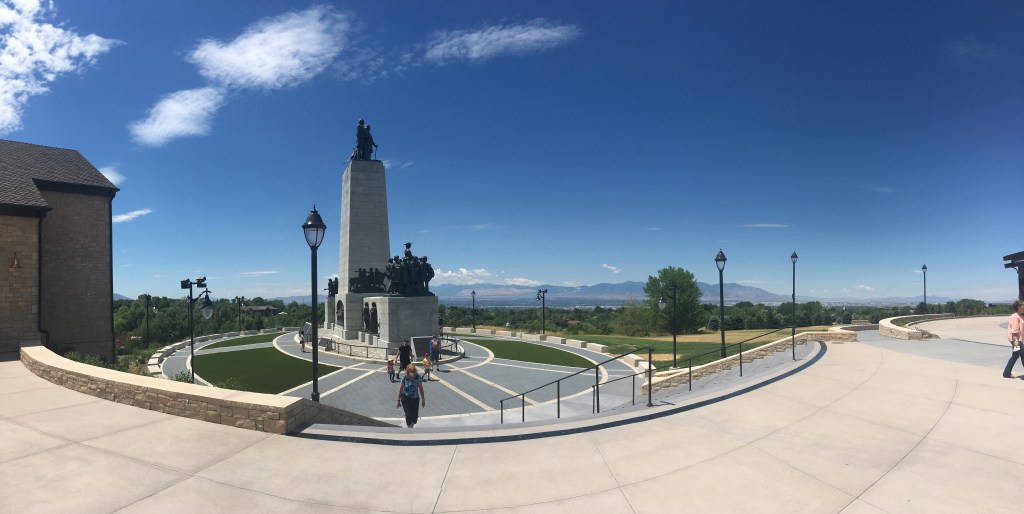

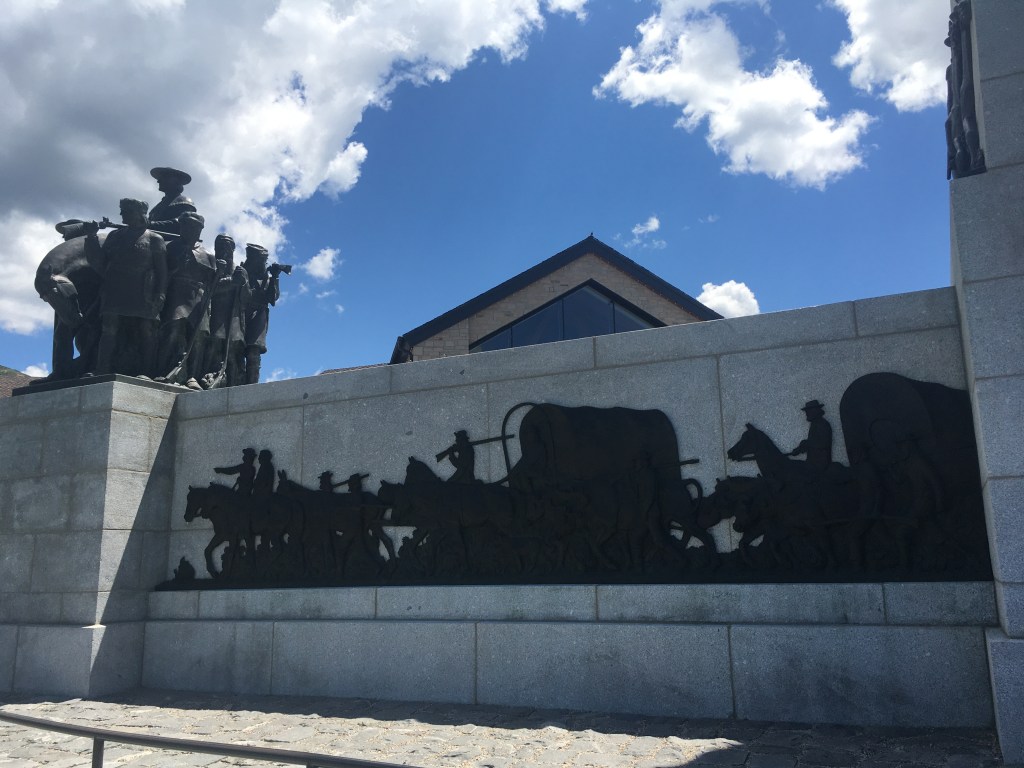
While I could probably write a whole book on just this monument, I should keep rolling along here.
To get into the park itself, you walk through a replica of the “Eagle Gate”. The Eagle Gate was a fancy archway Brigham had over the gate to get onto his compound in what is now downtown Salt Lake. It has *surprise surprise* an eagle on it, which is flying over a beehive, the emblem for Utah nowadays that stems from Brigham’s association of the beehive and a strong, cooperative, and industrial work ethic. The one in downtown Salt Lake is a massive version of the 22 foot wide original one, as the present day one spans over four lanes of traffic. The original Eagle Gate does still exist still- it’s in the Daughters of the Utah Pioneers Museum in Salt Lake (which was closed when I visited).
If you’re not paying attention, you might get hit by a train- ok, that’s a bit of an exaggeration. Upon entering, you’re on a road, and every 15-20 minutes or so, a motorized train (woefully described as a “historic replica” on the website) pulling a few passenger cars pulls up to a nearby stop- you can hop on and get a ride to other areas of the sprawling park. I took a street-by-street approach and began wandering.

The compound is laid out on a grid with houses, community buildings, stores, a bank, a jail, and any number of other buildings. Most were the original buildings themselves, picked up and moved to the site for preservation. Some were recreations of the originals which had been torn down or lost in fires. Many of the buildings had (Mormon Missionary) living history actors in them, some performing artistic tasks like leatherworking or blacksmithing, with others providing information or selling things like… donuts? The website for the donut shop says they use a special ingredient used by the pioneers? (fact check, the donut was invented in 1847, Salt Lake was also settled in 1847, I’ll give them that one)


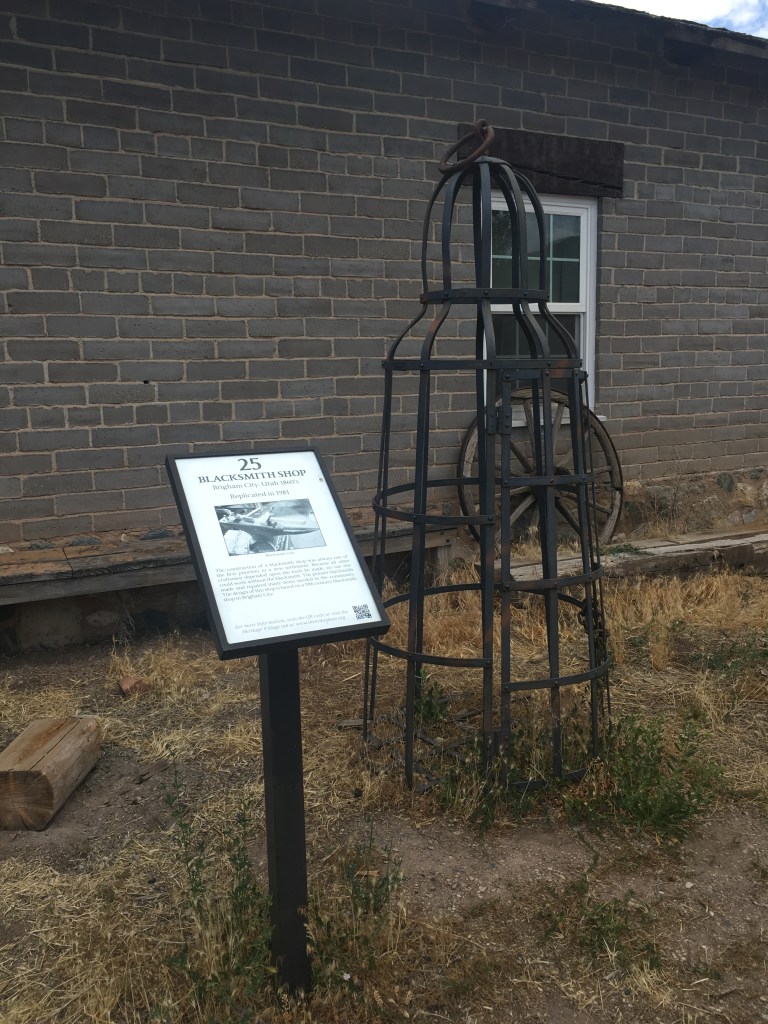
Eventually, I trekked up the hill to one of the newer parts of the Park, which hosts a representational Native American Village, which includes representational dwellings for the Ute, Navajo, Paiute, Goshute and Shoshone people. On my way in, I saw this sign:
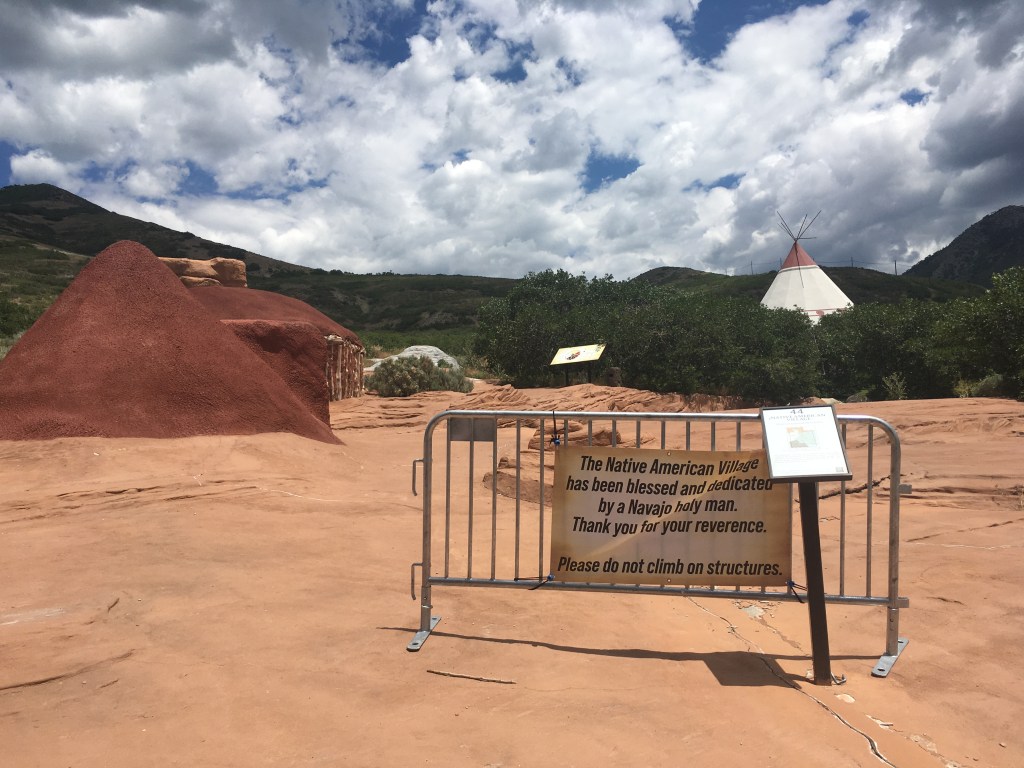
The only open building was the tipi, where a woman was showing how corn is ground up and allowing people to try sitting on a woven sitting mat. It was a little odd to say the least. Signs and interpretation was super limited in the area, and it was deserted. The website has more information on what the experience is usually like, as COVID probably had some big impacts on how things were operating. I did find this mention on the website entertaining:
This new Teepee, the largest in America, can easily seat 110 guests in the comfort of air-conditioning in the hot weather and has heat for visits during the cooler months.
There was also a big medicine wheel painted on the ground in one area near the tipi and Hogans.
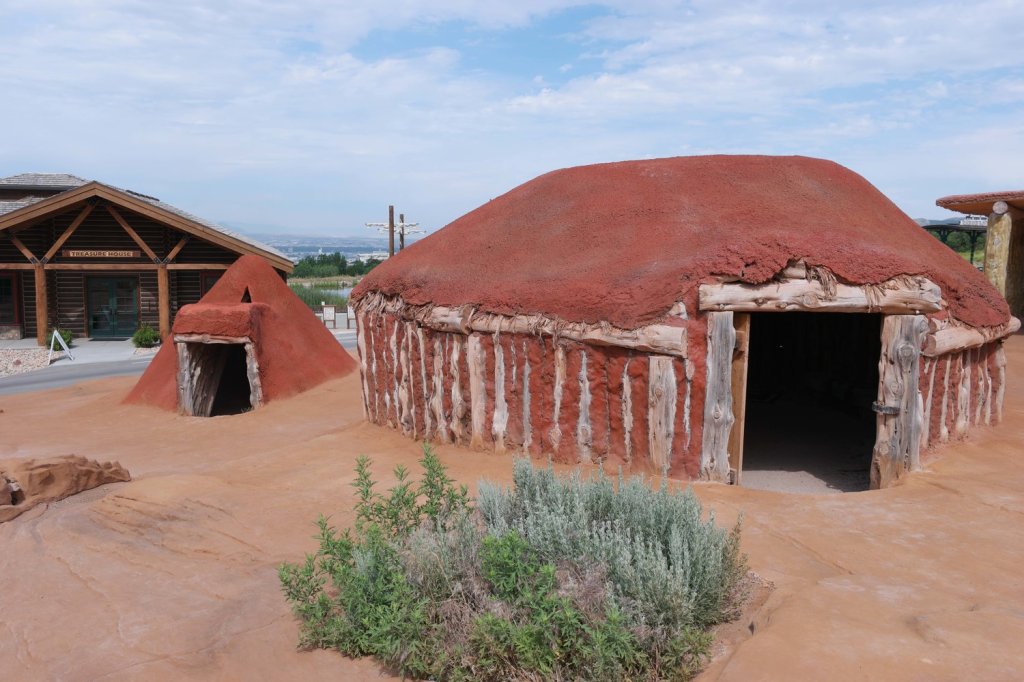
Recreated hogans 
recreated (concrete) tipi (from This is the Place Heritage Park Website)
This site was located overlooking an extremely popular simulated gold panning activity area happening just down the hill where people would go to a log-cabin style building, pick up their bag of dirt, and sift it in an artificial creek below the building. That’s worth thinking about. The juxtapositions in this place are just crazy when you really crack into them.
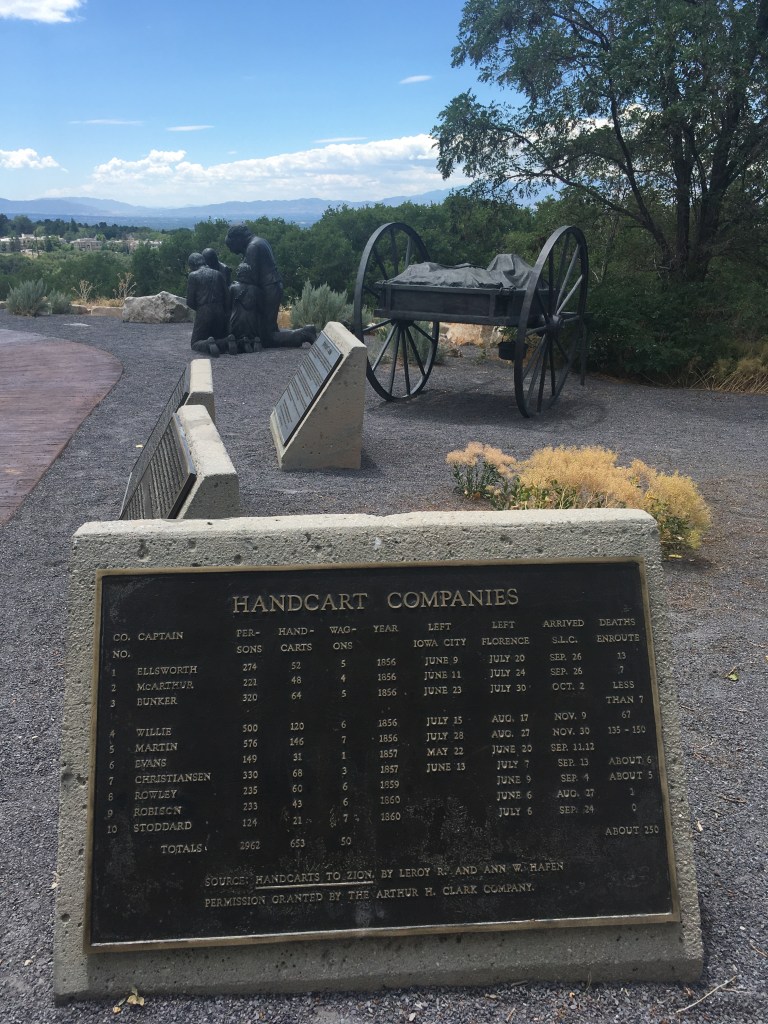
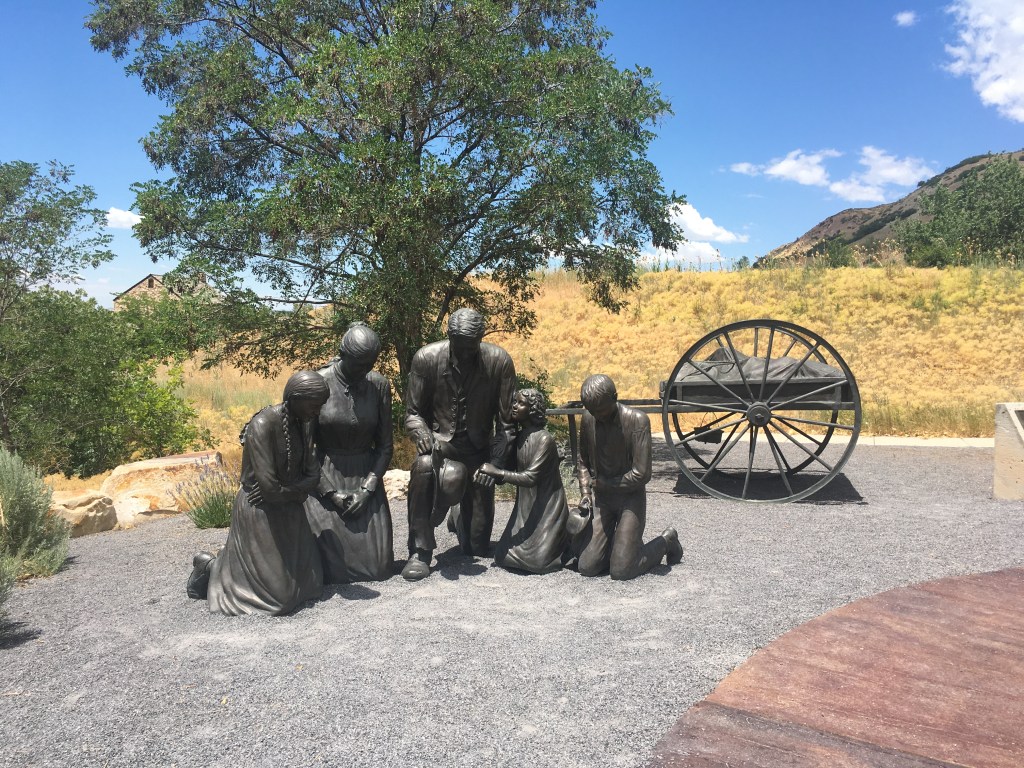
Near that gold panning frenzy was a path that led to a big patch of artificial grass with a few larger than life statues of two parents and three children praying. When I first walked up, a whole gaggle of adults and teens were climbing all over the reverent statues, laughing and shouting, getting a group picture then hopping off and walking away. The statue, which also included a larger than life handcart nearby, was called “Journey’s End” and was associated with a few plaques talking about the trials of a later group of Saints that, after spending most of their money sailing to the United States from Southern and Eastern Europe, couldn’t afford to get oxen and covered wagons so they had to push and pull large two wheeled carts (handcarts) across the United States all the way to Utah. Handcart companies traveled to Salt Lake from 1856 to 1860 and over the course of the travels, according to LDS plaques at the site, about 250 people died, many due to surprise snow storms or other mishaps, while about 2,900 people did make it. The handcart journeys got a bad rap from all the people dying en route- one party that is highlighted later on in the trail for instance, the Martin party, lost 250 people out of 900 according to some accounts, largely due to winter conditions encountered on the trail when the party left in August when they should have left in May or June to beat the winter weather, greatly miscalculated travel times, and inadequate supply stops along the route.
More about these carts in a little bit.


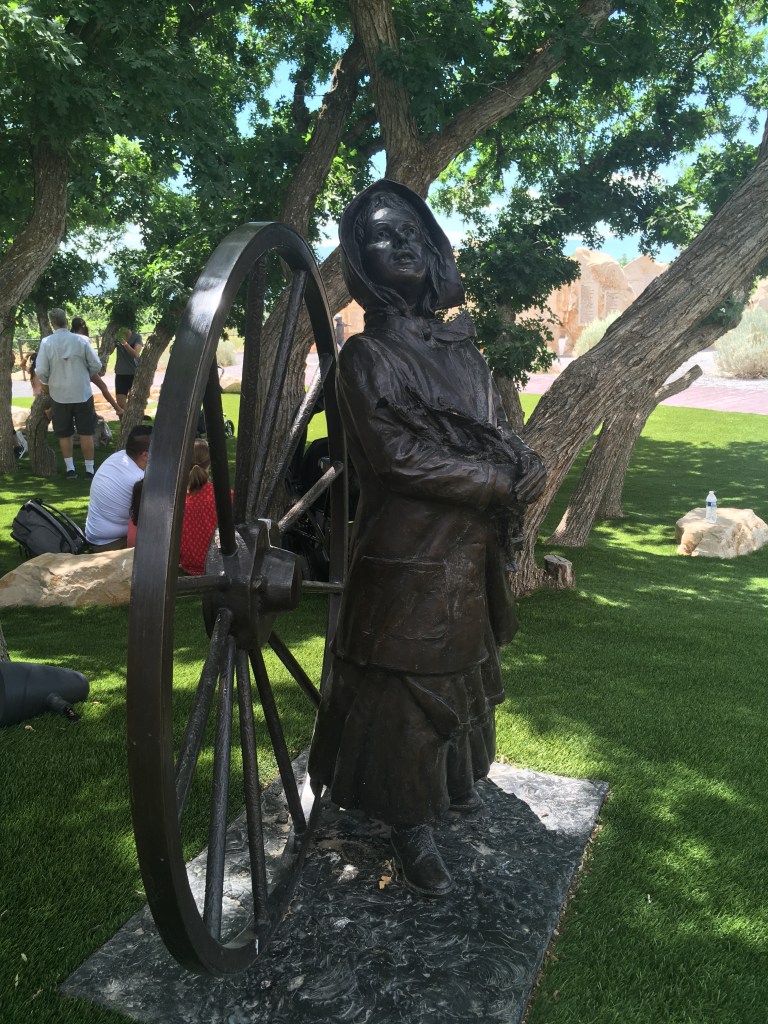
Situated maybe 20-30 feet away from the praying family was a statue of a young girl, maybe 12 or 13, sitting on the ground. She was more normal size in comparison to the huge family of giants nearby, and had a small sign with a push button on it. A narration emanated from a hidden speaker disguised as a rock. You can listen to it here. I may have been a bit dehydrated or something, but it took me a bit to realize that this was the end of a whole trail of these bronze statues- the path continued down the hill, paralleling and sometimes crossing over an artificial creek flowing over bright orange sandstone. The intent was that you climbed the hill, experiencing a tiny taste of the trek up and over mountains, across prairies and rivers to get to the Salt Lake area- instead I experienced a leisurely stroll downhill, leaving some energy for contemplation. Kids were climbing around in the stream the whole way down the hill as I stopped at each statue and pushed the accompanying button to hear the stories. The very last one (which was the first stop if I had been going the right way) was a statue of a small girl, maybe 6 or 7. She stood next to a bronze wagon wheel. Her story was of her sitting next to the wagon one night, falling asleep, and never waking up because she died from exposure. Damn.
Other stories included pioneer handcart companies being hit by a snow storm when they had run out of food and being rescued by help sent from Salt Lake, dragging pushcarts over mountains with names like “Rocky Ridge”, and crossing hazardous rivers with wagons and oxen.
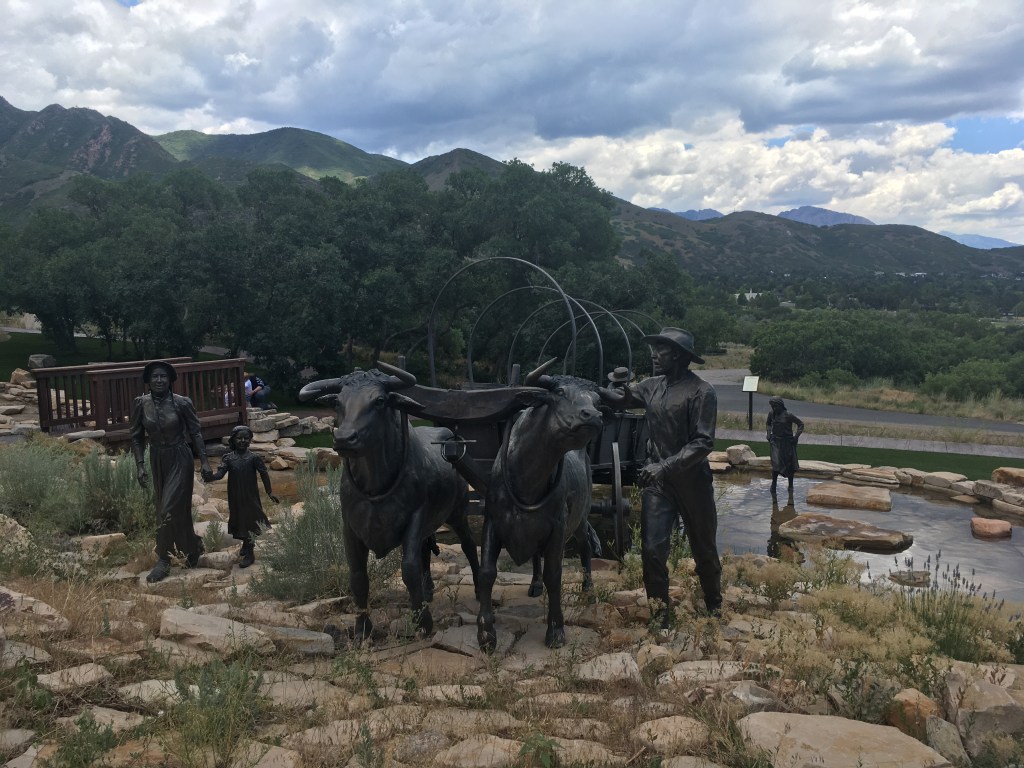
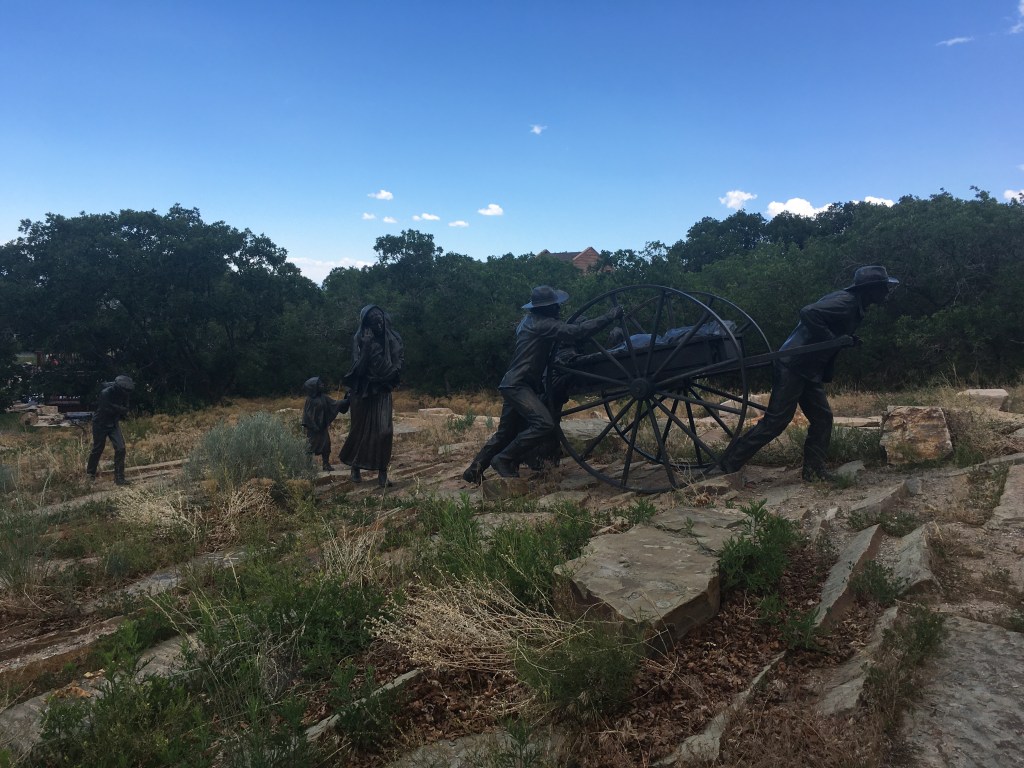


The juxtaposition of the nice creek, laughing children and absolutely grim and difficult tales was a bit jarring to say the least. It was effective though as both a solemn memorial and a place of respite for children to enjoy in the summer heat. The layout of the statues, trail, and creek flowed well. It made me really think about the individual stories of people who came out to Salt Lake, and I’m sure for the Mormon folk out there it highlights the struggle that their ancestors wrestled with and the grace of God to find religious freedom and a new home in Zion (the Salt Lake City, Utah area). The viewer can experience a (much more leisurely than the pioneers, but still uphill) taste of the pioneer experience by walking up the hill and viewing the Great Salt Lake at the top of the hill, perhaps declaring between labored breaths ‘this is the place!’
The final (or beginning) of the trail had a series of 16 huge sandstone monoliths with the engraved year, name, and age of each child who died on the way to Salt Lake, about 600 of them identified so far through the LDS’ extensive family research work. The boulders are accompanied by statues of children, or modern day parents with children, which is a bit spooky, but probably comforting for people who might otherwise be really shook by facing hundreds of names of dead children.
I made my way back into the town area and looked for some shade and to see if I might have missed anything. That’s when I saw the handcart shop.
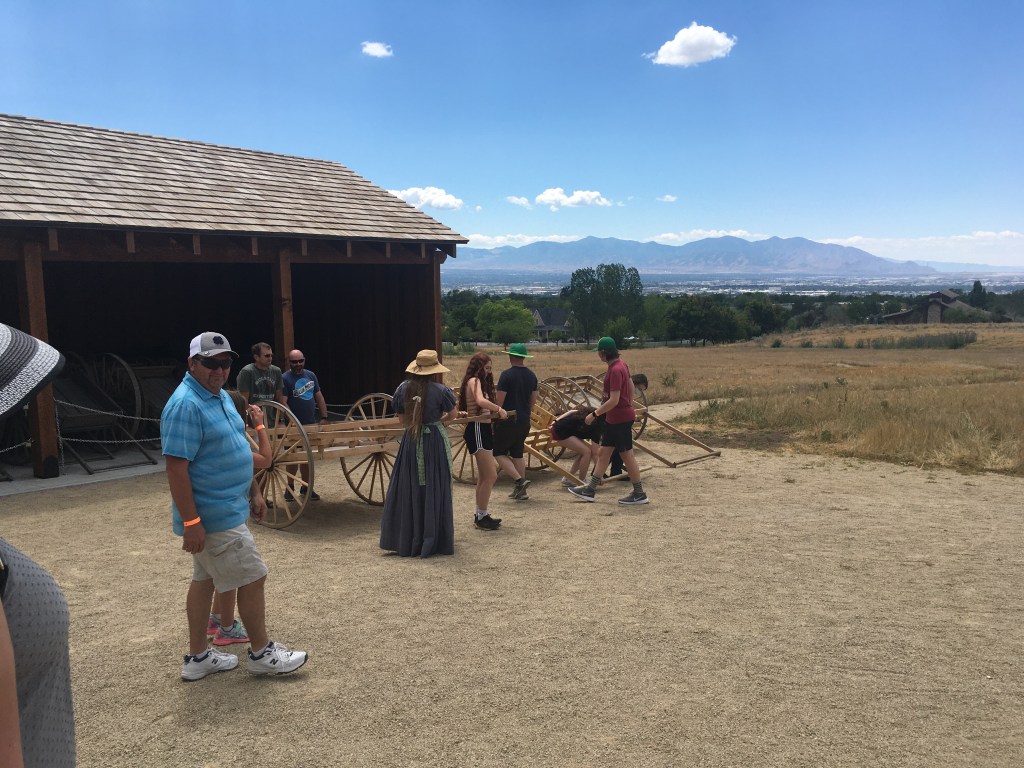
A family group moved through a covered-bridge looking structure ahead of me, over to a barn looking structure situated behind the log cabins. An employee in pioneer dress including a straw hat addressed them, asking if they wanted to take the carts for a spin and hear more about them. They said sure and the woman introduced the carts and their context, which I talked about a little earlier. She also included that each cart could hold about 300-500 pounds of stuff-clothes, food, water, shelter, everything, meaning that everyone who could had to walk or be carried by someone else. With that, she told us about the recreated carts available for test drives- they each weighted 50 pounds and were empty. Two people would pull the cart and two people would push from the back as they navigated a whole dirt course of hills, straightways, curves, and “whoop-de-doos” as I call them- small hills in quick succession. Since I was by myself (and very COVID conscious) I just stood and watched the others hauling their carts around the course. It was at most not much longer than a quarter mile of a course.
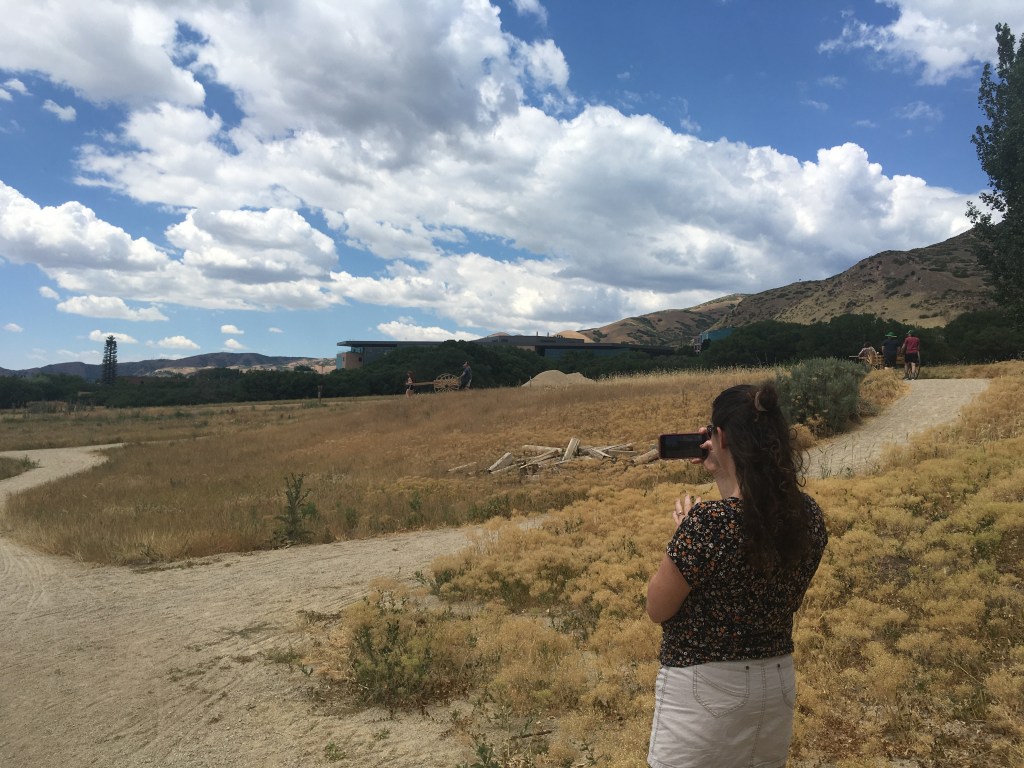
It reminded me of a phenomenon of Mormon Handcart Trek reenactments , where participants get decked out in pioneer dress, load up carts, and hike on certain segments of the Mormon Trail, usually for a few days before returning home. There is a whole industry around this now, where you can get your coordinating dresses and bonnets- some say you should have three outfits for the trek (which many actual pioneer folks only had 1-2 sets of clothes, one that was worn and repaired daily and another for special events like church). I’d love to explore this more at some point- from a religious studies point of view it is just brimming with potential- the development of pilgrimage, the mythologization of the Handcart Pioneers and their journey, it goes on and on.
(side note- Desert Book, the official publishing company of the LDS Church made a movie about teenagers on a 3 day trek called Trek-The Movie. For your viewing pleasure (or pain, depending on who you are and what you’re into), here’s the trailer, and here’s a review on the movie, which can only be viewed by purchasing a DVD from Deseret Book)
It was starting to get late- I had been at the park for a few hours and was feeling the impacts of the dryness and warm sun. I wanted to hit the gift shop on the way out for my customary patch and maybe some postcards. What I found was possibly more exciting: a pioneer bonnet. Was it handmade? According to the tag, yes.

I mean, it’s like going to Disneyland and not getting mouse ears. It’s rare that you escape without them. After seeing the handcart trek section, I was really feeling that “pioneer spirit”.
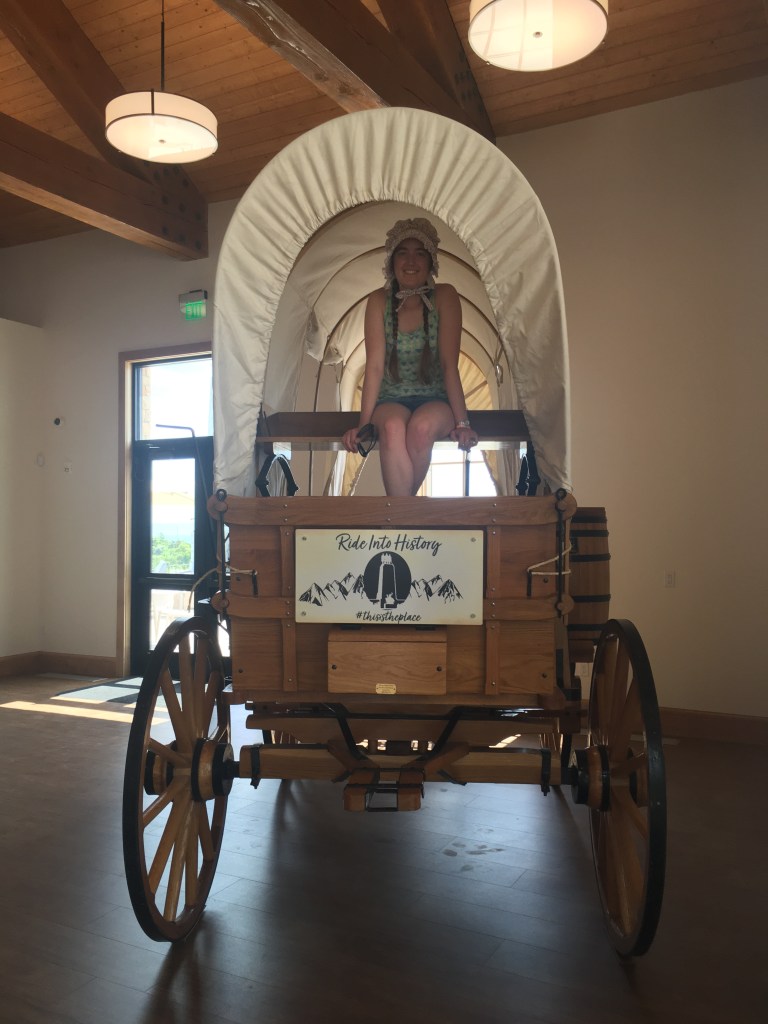
I headed back up the mountain to the ski resort and hotel where my partner was at for the tournament. Somehow, I didn’t get sunburned even though I only put on sunscreen once for the whole day. We were headed back to California via Reno the next day. Even though it was a short trip, I had such a good time exploring and putting my Religious Studies brain to work. I will most definitely be back out there again- hopefully soon, and hopefully by train.
 Katie Buesch